
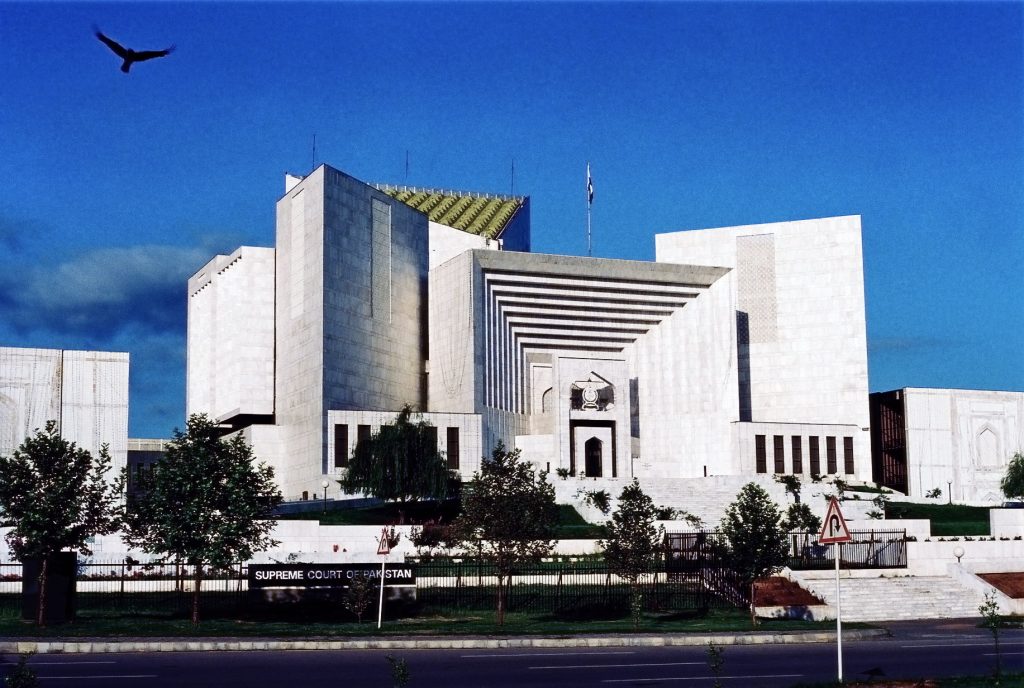
HRCP Warns Pakistan’s Democracy and Fundamental Rights Face an ‘Escalating Assault’
Pakistan’s leading independent human rights body has warned that the country’s constitutional democracy and fundamental rights are under an “escalating assault”. The Human Rights Commission of Pakistan (HRCP) issued the warning after its 40th annual general meeting in Lahore, saying freedom of expression, judicial independence and democratic institutions are all facing growing threats.
In a press release dated 15 November 2026, the commission’s general body said the right to freedom of expression is being “steadily dismantled through censorship, surveillance, restrictive regulations and the abuse of criminal laws”. It called on the state to safeguard constitutional democracy, restore the independence of institutions and ensure accountability.
The warning is one of the strongest statements HRCP has issued this year. It covers almost every area of public life in Pakistan: the courts, the media, the provinces, religious minorities and the economy. This article explains what HRCP said, why it matters, and what the commission wants to change.
What HRCP said
HRCP is Pakistan’s oldest independent human rights organisation. Its annual general meeting brings together its members from across the country to review the state of human rights and set the commission’s position. The statement from this year’s meeting was signed by HRCP Chairperson Asad Iqbal Butt.
The commission warned that the continued erosion of fundamental freedoms and democratic structures poses serious challenges to the country’s rights framework, and that the issues must be addressed urgently.
The statement does not only describe problems. It also makes a series of clear demands: produce detained people before the courts, repeal sweeping detention powers, end military trials of civilians, review two recent constitutional amendments, and protect religious minorities and vulnerable communities.
The case HRCP points to: two lawyers jailed for 10 years
At the centre of HRCP’s warning is the case of two human rights lawyers, Imaan Mazari-Hazir and her husband Hadi Ali Chattha. In October 2026, an anti-terrorism court sentenced each of them to 10 years in prison.
HRCP described the sentences as “a chilling example of how anyone exercising their constitutional rights can be targeted”.
The case goes back to October 2024, when the England cricket team was touring Pakistan. Police said the couple removed road barriers placed along the team’s route in Islamabad and clashed with traffic police. They were charged under the Anti-Terrorism Act and sections of the Pakistan Penal Code, and pleaded not guilty.
Judge Tahir Abbas Sipra announced the verdict on 29 October 2026 at Adiala jail in Rawalpindi, where the trial was held. Each lawyer received 10 years under the Anti-Terrorism Act and a fine of Rs100,000, plus shorter sentences of one and two years on related charges. The sentences run at the same time, so the total is 10 years each.
The judge wrote that the couple had put the security of the England team at risk and acted to “create a sense of terror”, according to a copy of the judgement obtained by the AFP news agency.
The couple had already spent most of 2026 in custody. They were arrested on 23 January 2026 in a separate case over social media posts, and a court sentenced them to 17 years each under the Prevention of Electronic Crimes Act (PECA). The Supreme Court suspended those sentences on 17 September 2026 and granted them bail, but police rearrested them the same day in the security case.
Amnesty International called the October convictions “an indictment of Pakistan’s justice system”. Imaan Mazari-Hazir’s mother, Shireen Mazari, who served as Pakistan’s human rights minister under former prime minister Imran Khan, called it a “sham trial without any due process”. The family says it will challenge the verdict in the Supreme Court.
Pakistan’s law minister, Azam Nazeer Tarar, has repeatedly said the country’s judiciary is independent.
For HRCP, the case is not only about two individuals. It is about the message the verdict sends to everyone who defends rights, speaks out, or takes up unpopular cases. When lawyers themselves face terrorism charges for their work, the commission argues, ordinary citizens are far less likely to speak up.
Enforced disappearances and detained activists
HRCP also raised enforced disappearances, which it called a “grave violation of the right to liberty and due process”. Enforced disappearance means a person is taken by state agents, or with the state’s knowledge, and the authorities then refuse to say where the person is or what has happened to them. Families are left with no information and no legal way to help.
The commission named three detained activists: Mahrang Baloch, Ali Wazir and Idris Khattak. It said their continued detention “demonstrates the state’s failure to protect those demanding accountability”.
HRCP demanded that all detainees be produced before competent courts, that the arbitrary detention powers under the Anti-Terrorism Act be repealed, and that internment centres be abolished. It also called for the proscription of the Jammu Kashmir Joint Awami Action Committee in Azad Jammu and Kashmir to be withdrawn.
These demands matter because they go to a basic principle: no one should be locked up without being brought before a judge. When people can be detained for long periods without trial, it becomes very hard for families, lawyers or journalists to find out what has happened to them.
Balochistan: a call for debate and trade
On Balochistan, HRCP said the security situation “demands an open, national debate”. It also called for the restoration of cross-border trade in the province to protect local livelihoods.
Balochistan is Pakistan’s largest province by area and one of its poorest. It has faced a long-running insurgency, and many local people say they feel excluded from decisions about their own province. Cross-border trade with Afghanistan and Iran has long been an important source of income for families living near the borders. When that trade is restricted, many households lose their main way of earning a living.
By calling for a national debate, HRCP is saying that security problems in Balochistan cannot be solved by force alone. The commission wants political leaders, civil society and local communities to talk openly about the province’s problems and agree on a way forward.
Khyber Pakhtunkhwa and the erosion of federalism
The commission said it was “perturbed by the erosion of federalism and democratic representation in Khyber Pakhtunkhwa”. Federalism means that provinces have their own elected governments and real powers, rather than everything being decided in Islamabad.
HRCP pointed to three developments in the province: the imposition of an emergency and governor’s rule, the detention of the province’s elected chief executive, and the mass arrests of Pakistan Tehreek-e-Insaf (PTI) workers in October 2026.
It added that the Federal Constitutional Court’s intervention, which restricted the Peshawar High Court’s exercise of its constitutional jurisdiction, “further undermines access to justice and judicial independence”.
The commission urged political parties to return to the democratic principles in the Charter of Democracy, the 2006 agreement between Pakistan’s two main political parties that promised to respect civilian rule, an independent judiciary and free media. It said parties should not sacrifice democratic institutions for “political expediency”, meaning short-term political advantage.
The courts and the 26th and 27th Amendments
A large part of HRCP’s statement deals with the courts. The commission said the 26th and 27th Constitutional Amendments “have seriously undermined judicial independence and institutional checks and balances”.
Constitutional amendments change the basic rules of the state. The 26th Amendment, passed in October 2024, changed how the Chief Justice of Pakistan is chosen and set up a new system for appointing judges. Critics, including HRCP, said it gave politicians more control over the judiciary. The 27th Amendment, passed more recently, has drawn similar criticism.
HRCP called for both amendments to be reviewed. It also demanded that lifetime immunity for public officeholders be withdrawn and that military trials of civilians be brought to an end.
The commission said any future constitutional amendments “must be grounded in genuine, cross-party political consensus”. In simple terms: changes to the Constitution should be agreed by all major parties, not pushed through by one side alone.
The same rule, HRCP said, should apply to proposals to create new provinces. New provinces “must not be pursued in ways that undermine Pakistan’s federal structure”, and they should not be created “at the expense of stronger local governments”.
This point matters because the debate over new provinces has returned to the headlines. Defence Minister Khawaja Asif said on Sunday that it would not take long to reach a consensus on creating new provinces. HRCP’s message is that the debate should not be rushed, and that giving power to local governments matters as much as drawing new provincial boundaries.
Religious minorities still face violence and persecution
HRCP warned that religious minorities “continue to face targeted violence, discrimination and blasphemy-related persecution”. It said impunity — the failure to punish those responsible — “remains entrenched”.
The commission pointed to attacks on Ahmadiyya places of worship, mob-led attacks, including one against a Christian doctor in Sheikhupura, and the entrapment of people in false blasphemy cases. In Pakistan, blasphemy is a criminal offence that can carry the death penalty, and false accusations have often been used to settle personal disputes or target minorities.
HRCP urged that the National Commission for Minorities be set up without delay, and that those who incite violence and orchestrate forced conversions be held accountable.
The commission also stressed the state’s responsibility to protect the communities most exposed to violence and discrimination, particularly women, transgender persons and other marginalised groups. Their rights, it said, “cannot remain merely promises on paper”.
Economic injustice and the cost of living
The statement also deals with the economy. HRCP said economic injustice “has continued to deepen”, with austerity measures and inadequate social protection placing a “disproportionate burden on low-income households”.
Austerity means the government cutting spending to reduce its deficit. HRCP’s argument is that when the government cuts back, the poorest families feel it most: food, fuel and electricity become harder to afford, while public services such as health and education get weaker.
The commission insisted that economic policy must prioritise the right to a living wage, decent work and access to essential public services. A living wage is a wage that is enough to cover a family’s basic needs: food, housing, healthcare, education and transport.
Why this warning matters
HRCP is not a political party and it does not contest elections. Its influence comes from its independence and its long record of documenting human rights in Pakistan. When it speaks, governments, courts, journalists and international bodies listen.
This statement is important for three reasons.
First, it brings many separate concerns together into one picture. Freedom of expression, enforced disappearances, the courts, the provinces, minorities and the economy are usually discussed separately. HRCP argues they are connected: when one part of the democratic system weakens, the others weaken too.
Second, it is specific. The commission does not only warn in general terms. It names cases, laws and amendments, and it sets out concrete demands, from repealing detention powers to setting up the National Commission for Minorities.
Third, it comes at a sensitive moment. Pakistan is hosting major diplomatic meetings, including the Economic Cooperation Organisation’s Council of Ministers in Islamabad this week. The government is keen to present Pakistan as a stable, confident country. HRCP’s statement is a reminder that, in the commission’s view, serious problems remain at home.
The government has not yet formally responded to this statement. In the past, officials have rejected similar criticism, saying the judiciary is independent, that the courts follow the law, and that security measures are necessary to fight terrorism. The law minister, Azam Nazeer Tarar, has made that argument about the judiciary more than once.
What happens next
HRCP’s statement is a press release, not a court order. It does not force the government to do anything. But it sets a public record, and it gives journalists, lawyers, opposition politicians and international observers a clear account of what Pakistan’s own human rights community is saying.
Several things are worth watching in the coming weeks. The Mazari-Hazir and Chattha case is expected to go to the Supreme Court. The debate over new provinces is likely to continue, with the government and opposition parties holding talks. And the National Commission for Minorities, which HRCP wants set up without delay, has been promised before but has still not been formed.
For ordinary Pakistanis, the issues HRCP raises are not abstract. That is why the commission says these rights “cannot remain merely promises on paper”.
Frequently asked questions
What is HRCP?
The Human Rights Commission of Pakistan is an independent, non-governmental organisation that monitors human rights in Pakistan. It was founded in 1987 and is one of the country’s oldest rights bodies. It publishes reports, carries out fact-finding missions and speaks out when it believes rights are under threat.
What did HRCP warn about?
After its 40th annual general meeting in Lahore, HRCP warned of an “escalating assault on constitutional democracy and fundamental rights”. It said freedom of expression is being dismantled, judicial independence is weakening, enforced disappearances continue, and religious minorities and low-income families are facing growing hardship.
Who are Imaan Mazari-Hazir and Hadi Chattha?
They are human rights lawyers, husband and wife, who were sentenced to 10 years each in October 2026 by an anti-terrorism court over a 2024 incident involving road barriers placed for the touring England cricket team. HRCP called their sentences a “chilling example” of how people exercising their constitutional rights can be targeted. They had earlier been sentenced to 17 years each in a separate social media case, but the Supreme Court suspended those sentences in September 2026.
What are the 26th and 27th Constitutional Amendments?
They are changes to Pakistan’s Constitution that altered how judges are appointed and how the courts work. HRCP says both amendments have seriously undermined judicial independence and institutional checks and balances, and it wants them reviewed.
What does HRCP want the government to do?
The commission wants detainees produced before courts, arbitrary detention powers under the Anti-Terrorism Act repealed, internment centres abolished, military trials of civilians ended, the 26th and 27th Amendments reviewed, the National Commission for Minorities set up, and economic policy refocused on living wages and public services.
Conclusion
HRCP’s warning after its 40th annual general meeting is a detailed charge sheet against the state of democracy and human rights in Pakistan. It covers the courts, the media, the provinces, minorities and the economy, and it names the cases and laws it believes are doing the damage.
Whether the government acts on any of it remains to be seen. But the statement makes one thing clear: in the view of Pakistan’s leading rights body, the country’s democratic foundations are under strain, and the time to defend them is now.
Sources
- “HRCP’s 40th AGM warns of escalating threats to constitutional democracy and fundamental rights” — HRCP
- “Pakistan human rights body warns of escalating threats to democracy and fundamental freedoms” — Tribune India
- “ATC sentences Imaan, Hadi to 10 years in security breach case” — Dawn
- “Pakistan rights activist Imaan Mazari and husband jailed for 10 years” — Al Jazeera
- “HRCP press releases” — HRCP
This article is for general information and education only. It is not legal or financial advice.

Pingback: ICJ Says Pakistan's Courts Have Been 'Captured' After the 26th and 27th Amendments: What the Report Found - Findivoza
Pingback: Pakistan to Require Social Media Platforms to Register and Name Local Representatives - Findivoza