
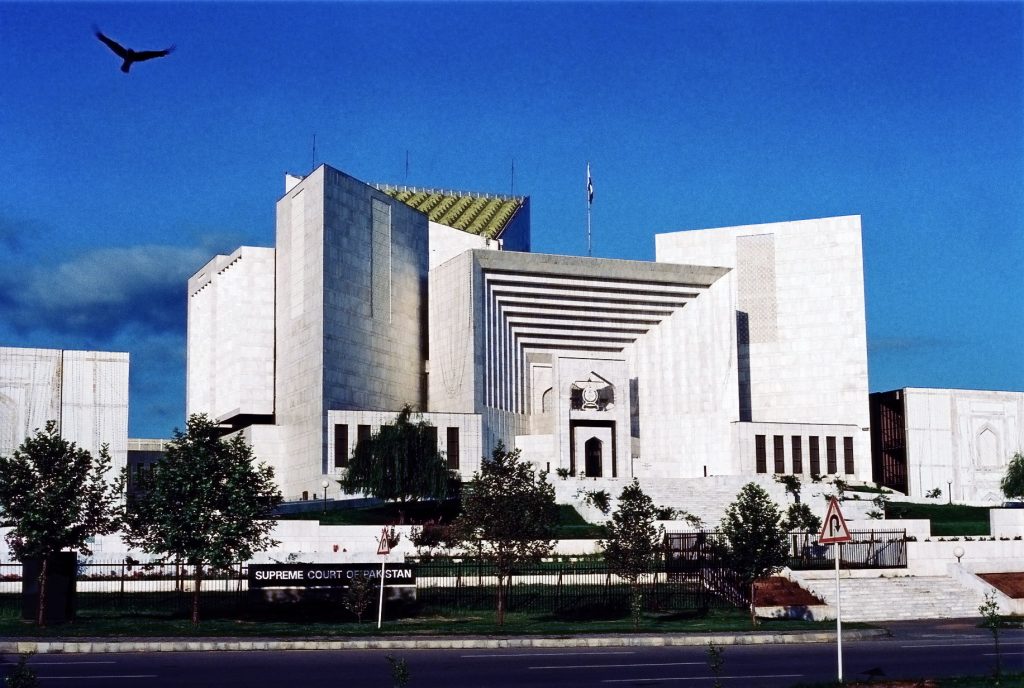
ICJ Says Pakistan’s Courts Have Been ‘Captured’ After the 26th and 27th Amendments: What the Report Found
Pakistan’s highest courts have effectively been “captured” by the political branches of the state, the International Commission of Jurists (ICJ) has concluded in a major new report published on Wednesday, 18 November 2026. The report says two constitutional amendments — the 26th, passed in October 2024, and the 27th, passed in November 2025 — have stripped away the safeguards that kept the judiciary independent, and left ordinary people with nowhere to turn when their rights are violated.
It is the strongest verdict yet from an international legal body on the state of Pakistan’s courts, and it comes a year after the 27th Amendment created a new Federal Constitutional Court and moved constitutional cases away from the Supreme Court.
What the ICJ found
The report, titled “Judicial Capture: Independence of the Judiciary in Pakistan after the 26th and 27th Constitutional Amendments”, examines the courts that sit at the top of Pakistan’s legal system: the high courts, the Supreme Court, and the new Federal Constitutional Court. It measures them against Pakistan’s obligations under international law, including the International Covenant on Civil and Political Rights (ICCPR), a treaty Pakistan has signed.
Its central finding is blunt. The ICJ says the “systemic undermining of judicial independence in Pakistan through a series of constitutional and legislative changes has effectively resulted in judicial capture by the political branches of the State”. In the ICJ’s view, that capture has “gravely impaired the judiciary’s capacity to act as an effective check on the Government and to provide effective remedies for violations of human rights”.
The ICJ’s Secretary-General, Santiago Canton, put it in plain terms:
“The 26th and 27th amendments have done exactly what we feared: they have placed Pakistan’s highest courts under the control of the executive. When the courts are captured, no one is left to hold the government to account, and victims of human rights violations have nowhere to turn.”
The report concludes that Pakistan’s highest courts “no longer enjoy the institutional guarantees of independence required by Article 14 of the ICCPR and the UN Basic Principles on the Independence of the Judiciary”. Article 14 guarantees the right to a fair hearing before a competent, independent and impartial court. The ICJ also says the changes have weakened the right of victims to an effective remedy, protected by Article 2(3) of the ICCPR.
What does “judicial capture” mean?
“Judicial capture” is a strong phrase, so it is worth explaining what it means in simple language.
An independent judiciary is one where judges can decide cases freely, without fear that the government will punish them or reward them for their decisions. That independence is protected by rules about how judges are chosen, how long they serve, who can remove them, and who decides which judge hears which case.
Judicial capture happens when those rules are changed so that the government — the executive, the branch that runs the country day to day — gains control over the courts. The courts still exist, judges still sit, and cases are still heard. But the people who run the courts, and the rules under which they work, are now chosen or controlled by the government. The courts can no longer act as a real check on the government’s power, because they answer to the government itself.
That is what the ICJ says has happened in Pakistan. The report does not claim that every judge is controlled or that every decision is wrong. Its argument is about the structure: the rules now in place, taken together, mean the courts no longer have the independence that international law requires.
What the 26th Amendment changed
The 26th Amendment was passed by Parliament in October 2024, two years ago. It made several major changes to the judiciary:
- It took away the Supreme Court’s suo motu powers. Suo motu means “on its own motion”. Before the amendment, the Supreme Court could take up a case by itself if it saw a matter of public importance, even if nobody had filed a petition. That power is now gone.
- It fixed the Chief Justice’s term at three years. Before, the Chief Justice served until retirement age. Now the term is limited to three years.
- It changed how the Chief Justice is chosen. The prime minister now appoints the Chief Justice from among the three most senior judges of the Supreme Court, rather than the most senior judge automatically taking the job.
- It changed the Judicial Commission, the body involved in selecting judges, bringing parliamentarians into it.
Supporters of the amendment at the time said the courts needed reform. The ICJ itself agrees that reform was needed. In its statement, the ICJ noted that it “has long advocated for reforms to make the judiciary in Pakistan more independent and accountable, including through an appointment process that is transparent and inclusive”, and that it “has also raised concern about judicial overreach and encroachment into the domains of Parliament and other institutions”.
But the ICJ says the 26th Amendment did not fix those problems. As Santiago Canton put it: “Pakistan’s judiciary needed reform. Judges were appointed without transparency, and at times the courts overstepped into the domain of other institutions. None of these problems have been fixed. Instead, the Government used people’s legitimate frustration with the courts as a pretext to bring them under its full control.”
What the 27th Amendment changed
The 27th Amendment, passed in November 2025, went further. Its main changes were:
- It created the Federal Constitutional Court (FCC), a new court at the top of the system, and moved constitutional cases away from the Supreme Court. Constitutional cases — disputes about what the Constitution means, about fundamental rights, and about conflicts between the federal government and the provinces — are now heard by the FCC instead of the Supreme Court.
- It changed the military’s chain of command, restructuring the top of the armed forces.
- It granted immunities to top government officials, protecting them from prosecution in certain circumstances.
- It allowed high court judges to be transferred between provinces on the recommendation of the Judicial Commission, without the judge’s consent. Critics say transfers can be used to pressure judges.
The amendment was signed into law by President Asif Ali Zardari. On the same day, 13 November 2025, two Supreme Court judges — Justice Syed Mansoor Ali Shah and Justice Athar Minallah — resigned in protest.
The 27th Amendment was the bigger of the two changes. Where the 26th Amendment changed how judges are appointed, the 27th moved the most important cases — the ones that decide whether the government has acted within the Constitution — to a new court whose judges are chosen under the new rules.
The new Federal Constitutional Court, one year on
The Federal Constitutional Court began work on 13 November 2025, the day the 27th Amendment was signed. When it started, about 56,608 cases were pending before the Supreme Court, and some 22,900 of them were transferred to the new court.
In its first year, the court decided 8,735 cases, while 6,657 new cases were filed, according to figures reported this week. The court is now the place where constitutional questions are decided — including cases about fundamental rights, which are the rights the Constitution guarantees to every citizen, such as freedom of speech, freedom of assembly, and the right to a fair trial. Its reach was illustrated earlier this month, when it barred the Peshawar High Court from hearing detention cases of PTI workers in Khyber Pakhtunkhwa.
The ICJ’s report examines the new court alongside the Supreme Court and the high courts, and finds the same problem across all three: the rules governing them no longer meet international standards for judicial independence.
The report’s findings echo concerns raised inside Pakistan. The Human Rights Commission of Pakistan (HRCP) has separately called for both amendments to be reviewed, and warned this week that democracy and fundamental rights in the country face an “escalating assault”.
The other side of the argument
The changes have their defenders, and their arguments are worth hearing.
Supporters say that constitutional petitions had crowded out ordinary appeals in the Supreme Court, and that a separate constitutional forum lets the Supreme Court concentrate on the cases ordinary citizens bring. They argue that a larger parliamentary role in judicial appointments restores a balance first set out in the 18th Amendment of 2010, which gave Parliament a greater say in how judges are chosen. A large section of the organised legal profession, led by the Independent Group of lawyers, backed the 27th Amendment.
Critics — including the ICJ, Amnesty International and the HRCP — argue that the new arrangements weaken judicial independence, that a Judicial Commission with fewer judicial members risks politicising appointments, and that transfers without a judge’s consent can be used as pressure.
The ICJ’s report sides firmly with the critics, but it is careful to say that the judiciary’s problems did not start with these amendments. The report acknowledges that judges were appointed without transparency and that courts sometimes overstepped. Its conclusion is that the amendments did not fix those problems — they replaced them with a different, worse one: courts under the control of the executive.
Why this matters for ordinary Pakistanis
A report about constitutional amendments can sound distant from daily life. But the independence of the courts affects every citizen, because the courts are the last place a person can go when the state acts against them.
If a person is detained without charge, it is the courts that can order their release. If the government seizes someone’s property, shuts down a newspaper, or bans a protest, it is the courts that decide whether that action was lawful. If those courts are controlled by the government, there is no independent referee left.
That is the point the ICJ is making. When it says victims of human rights violations have “nowhere to turn”, it means that the institution designed to protect them — the courts — can no longer be relied on to do so.
The scale of the justice system makes this more than a theoretical concern. About 2.22 million cases were pending in Pakistan’s courts at the end of 2025, roughly 1.9 million of them in the district courts, according to the Law and Justice Commission of Pakistan. For the millions of people waiting for those cases, the independence of the judge hearing them is not an abstract question — it is the difference between a fair hearing and one that has been decided in advance.
The wider picture is also worrying. The 2026 World Justice Project Rule of Law Index, released on 21 October, placed Pakistan 131st out of 143 countries, with an overall score of 0.36 out of 1. Pakistan’s score fell by 2.1 percent from the previous year, and it ranked fifth out of six countries in South Asia. The index measures eight factors, including constraints on government power, absence of corruption, fundamental rights, and civil and criminal justice.
What happens next
The ICJ is not a court, and its report does not change Pakistani law. What it does is put Pakistan’s record on the international stage, in the language of the treaties Pakistan has signed.
The report’s recommendations are clear: the ICJ says the “structural problems” it found “require substantial constitutional and statutory amendments”, and it recommends revising or repealing the provisions in the 26th and 27th amendments that are inconsistent with international law and standards on the independence of the judiciary.
That would require Parliament to pass new amendments — a political decision, and one the current government, which passed both amendments with a parliamentary majority, is unlikely to take on its own. The more likely effect of the report is pressure: from lawyers’ bodies, from human rights groups, from opposition parties, and from Pakistan’s international partners, who will now have the ICJ’s findings to point to.
For now, the report stands as the most detailed international assessment of what the two amendments have done to Pakistan’s courts. Its message is simple: the judiciary needed reform, but what it got was control. And until the rules change, the courts cannot do the job the Constitution gives them — holding the government to account.
Frequently asked questions
What is the International Commission of Jurists?
The International Commission of Jurists (ICJ) is an international organisation of judges and lawyers that works on the rule of law and human rights around the world. It is based in Geneva, Switzerland, and has been working on judicial independence in Pakistan for many years.
What did the ICJ report conclude?
The report concludes that the 26th and 27th Constitutional Amendments have effectively resulted in the “judicial capture” of Pakistan’s highest courts by the political branches of the state. It says the courts no longer have the institutional guarantees of independence required by international law, and can no longer act as an effective check on the government or provide effective remedies for human rights violations.
What is the 26th Amendment?
The 26th Constitutional Amendment was passed in October 2024. It removed the Supreme Court’s suo motu powers, fixed the Chief Justice’s term at three years, gave the prime minister the power to appoint the Chief Justice from the three most senior Supreme Court judges, and changed the Judicial Commission that selects judges.
What is the 27th Amendment?
The 27th Constitutional Amendment was passed in November 2025. It created the Federal Constitutional Court, moved constitutional cases from the Supreme Court to the new court, changed the military’s chain of command, granted immunities to top government officials, and allowed high court judges to be transferred between provinces.
What is the Federal Constitutional Court?
The Federal Constitutional Court is a new court created by the 27th Amendment. It began work on 13 November 2025 and now hears constitutional cases, including disputes about fundamental rights and conflicts between the federal government and the provinces. When it started, about 22,900 cases were transferred to it from the Supreme Court.
What does “judicial capture” mean?
Judicial capture means the courts are still there and still hearing cases, but the rules about who runs them and how judges are chosen have been changed so that the government controls them. The courts can no longer act as an independent check on the government’s power.
What does the ICJ recommend?
The ICJ recommends revising or repealing the provisions in the 26th and 27th amendments that are inconsistent with international law and standards on the independence of the judiciary. It says the problems require “substantial constitutional and statutory amendments”.
Does the ICJ report change the law in Pakistan?
No. The ICJ is not a court and its report does not change Pakistani law. But it is a detailed assessment by a respected international legal body, and it puts pressure on the government, Parliament, lawyers’ bodies and Pakistan’s international partners to act.
Sources
- International Commission of Jurists — “New report finds effective ‘judicial capture’ in Pakistan after the 26th and 27th Constitutional Amendments”
- Geo News — “World’s top jurists’ organisation questions judicial independence in Pakistan after 26th, 27th amendments”
- Asia Daily — “ICJ Warns Pakistan’s Constitutional Amendments Have…”
- World Justice Project — “Pakistan Ranks 131 out of 143 in the WJP Rule of Law Index”
- Young Lawyers Welfare Alliance — “Justice That Arrives on Time: A Practical Agenda for the Rule of Law in Pakistan”
This article is for general information and education only. It is not legal or financial advice.
