
Naltar Hydropower Project Finally Starts Supplying Power to Gilgit After 14 Years of Delays
After more than a decade of delays, the lights are finally getting brighter in Gilgit. The 16-megawatt Naltar Phase-III hydropower project became operational on Sunday, 22 November 2026, giving the city eight to nine extra hours of electricity a day and cutting the long hours of loadshedding that residents have lived with for years.
Gilgit-Baltistan Chief Minister Amjad Hussain visited the facility on Sunday, where officials from the water and power department briefed him on electricity supply to Gilgit city. He promised that the region’s energy crisis would be ended within five years — a bold promise in a region where winter power cuts can last 18 hours a day.
The project is small by the standards of Pakistan’s big dams. But for the people of Gilgit, who face freezing winters with little electricity, 16 megawatts and nine extra hours of power a day can change daily life.
What Is the Naltar Hydropower Project?
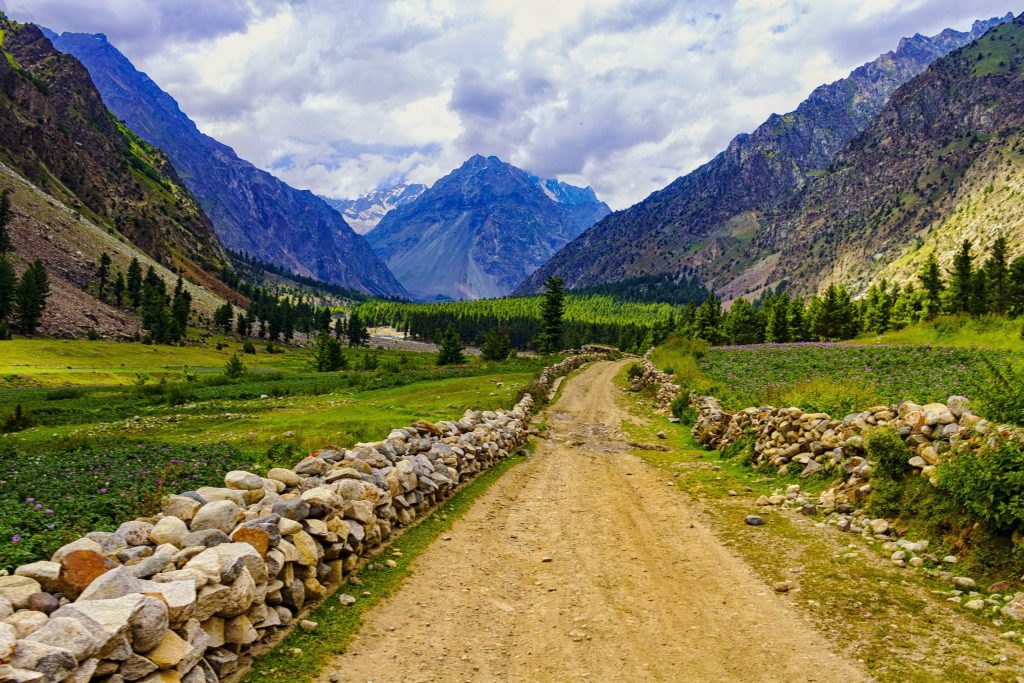
The Naltar hydropower project is built on the Naltar valley, near Gilgit city in Gilgit-Baltistan. It uses the fast-flowing water of the mountain valley to turn turbines and generate electricity — clean power from water, with no fuel to buy and no smoke.
The project has two parts. The 14-megawatt Naltar Phase-II and the 16-megawatt Naltar Phase-III were both included in the federal Public Sector Development Programme (PSDP) in 2009, and both were launched in 2012. Phase-III, the larger of the two, is the one that has now started supplying power.
The chief minister said the newly launched project provides eight to nine hours of additional power to residents of Gilgit city, helping reduce the ongoing loadshedding. He has also asked Prime Minister Shehbaz Sharif to formally inaugurate the project soon.
A Project That Took 14 Years to Finish
The story of Naltar Phase-III is, in many ways, the story of how hard it is to build anything in Pakistan’s mountains — and how slowly public projects can move.
The project was included in the PSDP in 2009 and launched in 2012. Then it stalled. According to the chief minister, work on the project had reached only 3 per cent by 2015. It stayed stuck for years, reaching just 23 per cent by 2024 — twelve years after work began.
Then, finally, things moved. Progress jumped to 72 per cent in 2025, and the project has now reached completion. Along the way, the project went through three revisions — changes to its plans, costs or timelines that are common when a project drags on for more than a decade.
Fourteen years from launch to completion is a long time for a 16-megawatt plant. For comparison, that is roughly the time it takes a child starting school in 2012 to finish university. The people of Gilgit waited through all of it, while the power cuts got worse.
Why This Matters: Gilgit-Baltistan’s Power Crisis
To understand why 16 megawatts matters so much, you need to understand the scale of Gilgit-Baltistan’s electricity problem.
Gilgit-Baltistan is not connected to Pakistan’s national electricity grid. The region depends on its own small hydropower plants, and in winter — when the rivers run low and the cold is at its worst — those plants produce far less power than people need.
The numbers tell the story. According to the GB Water and Power Department, floods since June 2026 have cut the region’s hydropower capacity from 211.6 megawatts to about 157 megawatts, against a summer demand of 285 megawatts. In other words, even before winter, the region was producing far less electricity than it needed.
Gilgit city itself shows the gap clearly. The city has about 70 megawatts of installed power capacity, but in winter it generates only around 33 megawatts. Worn-out turbines, silted intakes, weak transmission lines and faults that wait weeks for outside repair teams account for much of that loss, Dawn reported in an editorial on 18 November.
The result is that winter in Gilgit-Baltistan is a season of darkness and cold. Dawn reported on 22 November that Skardu, the region’s second city, was enduring up to 18 hours of power cuts a day as temperatures dropped below minus 6°C. In Minimarg, in Astore district, villages had received up to a foot of snow, with temperatures falling below minus 20°C, and would remain cut off for almost six months.
When the power goes, daily life stops. Water pumps do not work, so there is no water. Mobile phones and the internet fail, so people cannot work online or study. Shops close. Heating fails, and families must burn expensive firewood or buy gas instead. An 11.8kg cylinder of LPG, which costs around Rs3,470 in other parts of Pakistan, sells for about Rs7,000 in Gilgit-Baltistan.
Tourism, the region’s biggest source of income, also suffers. More than 60 per cent of residents depend on tourism, yet 90 per cent of winter activity is suspended for six months because of poor infrastructure. More than 80 per cent of hotels become dysfunctional in winter, flights to Gilgit operate only three days a week, and shops remain closed.
That is why nine extra hours of electricity a day in Gilgit city is big news, even if the project behind it is small.
What the Chief Minister Promised Next
Chief Minister Amjad Hussain did not present Naltar Phase-III as the end of the problem. He presented it as a beginning, and set out the other projects he says will follow.
The biggest promise is time-bound: he vowed to end the region’s energy crisis within five years. Whether that happens will depend on projects that have been stuck for even longer than Naltar.
One of them is the 40-megawatt Hanzel hydropower project, which has been stalled for the past seven years. The chief minister said its tendering process — the bidding process to choose a company to build it — would be started again within the next three months, so that it can be completed and give Gilgit city an uninterrupted supply.
He also said that issues relating to the 54-megawatt Attabad project have been resolved, and that serious efforts are under way to complete the Harpo and Shagarthang hydropower projects.
There are other plans too. The federal government plans to install 18 megawatts of rooftop solar panels on 499 government buildings in Gilgit-Baltistan by December this year. That is a welcome step, but as Dawn’s editorial noted, it would add far less power than the roughly 55 megawatts the floods took away in a single season.
A longer-term fix is also on the table: a regional grid project linking Gilgit, Hunza, Astore and Skardu, approved by the Executive Committee of the National Economic Council in 2023. That would let surplus power in one valley serve another, instead of each valley struggling alone. But it still needs to be completed.
Pakistan’s energy picture is changing fast in other ways too. Rooftop solar panels now supply a large share of the country’s electricity — read more in our report: Pakistan’s Solar Revolution: Rooftop Panels Now Supply 28% of the Country’s Electricity. And water, the source of Gilgit-Baltistan’s power, is under growing strain across the country, as the UN has warned in Punjab: Punjab Water Crisis: UN Warns Demand Already Outstrips Supply as Groundwater Falls Fast.
Winter Is Already Here
The timing of the Naltar launch matters. Winter has already gripped Gilgit-Baltistan. Heavy snowfall has cut off remote districts and closed the Babusar Road, which connects Naran in the Kaghan Valley with Chilas and is normally shut from November to June. The closure forces travellers between Diamer and Mansehra onto a 14-hour journey along the Karakoram Highway, instead of the seven-hour route over Babusar Pass.
Residents stock up on food and other essentials in advance, but still face shortages of gas, electricity, mobile coverage and medical care. The region’s chief minister said roughly 1,000 households were affected every year by climate disasters that destroyed homes, roads, powerhouses and schools, and that billions of rupees were spent annually on their restoration.
For the people of Gilgit city, the Naltar project’s extra eight to nine hours of power arrives just as the cold sets in. It will not end the crisis — the city still needs far more power than it has — but it will mean fewer hours in the dark, more hours with heating, water and light, and a winter that is a little easier to bear.
Frequently Asked Questions
What is the Naltar Phase-III hydropower project?
The Naltar Phase-III hydropower project is a 16-megawatt power plant in the Naltar valley near Gilgit city, in Gilgit-Baltistan. It generates electricity from the valley’s flowing water. It became operational on Sunday, 22 November 2026.
How much extra electricity will Gilgit get?
According to Gilgit-Baltistan Chief Minister Amjad Hussain, the project provides eight to nine hours of additional power a day to residents of Gilgit city, helping reduce loadshedding.
Why did the project take so long to complete?
The project was included in the Public Sector Development Programme in 2009 and launched in 2012, but progress stalled at just 3 per cent by 2015 and was still only 23 per cent in 2024. It went through three revisions before accelerating to 72 per cent in 2025 and reaching completion in 2026.
How bad is the power crisis in Gilgit-Baltistan?
Very bad, especially in winter. The region is not connected to Pakistan’s national grid and depends on small hydropower plants. Floods since June 2026 cut its hydropower capacity from 211.6 megawatts to about 157 megawatts, against a summer demand of 285 megawatts. Skardu has faced up to 18 hours of power cuts a day this winter, and Gilgit city generates only about 33 megawatts in winter from 70 megawatts of installed capacity.
What other power projects are planned for Gilgit-Baltistan?
The chief minister said the tendering process for the stalled 40-megawatt Hanzel hydropower project would restart within three months, issues with the 54-megawatt Attabad project have been resolved, and work is under way on the Harpo and Shagarthang projects. The federal government also plans 18 megawatts of rooftop solar on 499 government buildings by December 2026, and a regional grid linking Gilgit, Hunza, Astore and Skardu was approved in 2023.
When will the project be formally inaugurated?
Chief Minister Amjad Hussain said he has requested Prime Minister Shehbaz Sharif to formally inaugurate the project soon. No date has been announced yet.
Conclusion
The Naltar Phase-III hydropower project is a small plant with a long history — 14 years from launch to completion, three revisions, and a decade spent barely moving. But for the people of Gilgit, its meaning is simple and immediate: eight to nine more hours of electricity a day, just as winter arrives.
It will not solve Gilgit-Baltistan’s power crisis on its own. The region still needs far more power than it produces, its plants are old and damaged by floods, and it remains cut off from the national grid. The chief minister’s promise to end the crisis within five years will be judged by whether the stalled projects he named — Hanzel, Attabad, Harpo and Shagarthang — actually get finished this time.
For now, though, Gilgit has something it has waited a long time for: a project that was promised in 2009, started in 2012, and is finally, in November 2026, producing power. In a region where winter means 18-hour blackouts, that is news worth celebrating — and a reminder of how much still needs to be done.
