
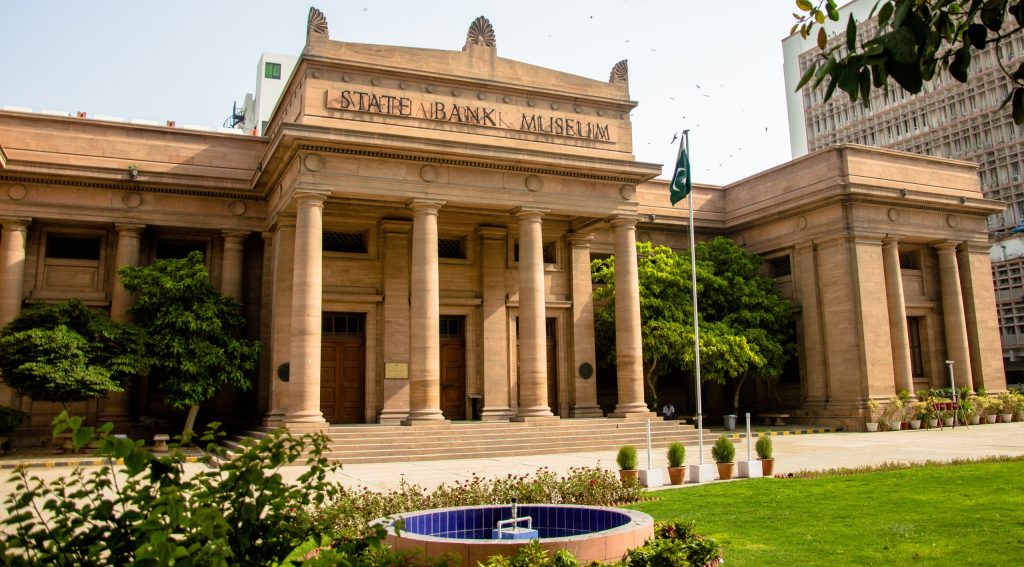
State Bank of Pakistan Warns Growth Alone Won’t Create Jobs as Unemployment Rises to 7.2%
Pakistan’s economy grew last year, prices stabilised, and the country’s external accounts improved. Yet the State Bank of Pakistan says this is not enough. In its annual report on the economy, released on Monday, 16 November 2026, the central bank warns that Pakistan’s growth is not creating enough jobs — and that without deep structural reforms, the country risks wasting the energy of the youngest large population in its history.
The report, the Annual Report on the State of Pakistan’s Economy 2025-26, is the State Bank’s most detailed health check of the country in a year. Its message is twofold: the economy proved resilient in a difficult year, but the old pattern — short bursts of growth that fade quickly and leave too few people in decent work — has not changed.
What the State Bank’s report says
The headline numbers for the financial year 2025-26 (FY26) look encouraging at first glance. Real GDP — the total value of everything the country produces, adjusted for price rises — grew by 3.7 per cent. That growth came despite floods at the start of the year and disruption from the conflict in the Middle East later in the year.
The main driver was a rebound in large-scale manufacturing: the factories that make textiles, food products, cement, cars and other goods picked up strongly, and because manufacturing buys from farms and sells to shops and transport firms, the recovery spread into agriculture and services too.
Strong remittances — the money Pakistanis working abroad send home — also helped. They kept the current account deficit, the gap between what Pakistan earns from the rest of the world and what it spends, down to just 0.1 per cent of GDP in FY26.
Inflation, the pace at which prices rise, was brought under control for most of the year. Careful monetary and fiscal policy kept average national consumer price inflation close to the top of the State Bank’s medium-term target range of 5 to 7 per cent. The report does note, however, that an energy price shock linked to the Middle East conflict pushed annual inflation into double digits from April 2026.
The government also tightened its belt. Fiscal consolidation — spending less relative to what the state collects — combined with lower interest payments on government debt, improved the public finances. The State Bank credits this improvement to prudent monetary policy, fiscal consolidation and economic reforms carried out under the International Monetary Fund (IMF) programme.
On the surface, then, this is a story of recovery. The problem, the report argues, is what lies underneath.
Growth is back — but the jobs are not
The most striking warning in the report concerns jobs. Unemployment in Pakistan rose to 7.2 per cent in FY25, up from 6.3 per cent in FY21 and 5.7 per cent in FY18. In plain terms: a larger share of people who want work cannot find it, even as the economy grows.
For young people the picture is worse. Youth unemployment stood at 12.8 per cent in 2024-25, up from 11.1 per cent in 2020-21. That means roughly one in every eight young Pakistanis looking for work cannot find a job.
The report includes a special chapter, “Structural Challenges to Job Creation in Pakistan”, which argues that this is not a temporary problem caused by one bad year. It is structural — built into the way the economy works.
One measure in the report shows how weak the link between growth and jobs has become. Economists use a figure called employment elasticity to measure how many jobs each percentage point of economic growth creates. In Pakistan, that figure was 0.6 in the period from 1972 to 1978 — meaning growth created jobs at a healthy rate. By 2000-18, it had fallen to around 0.2. Growth today creates only about a third as many jobs as it did in the 1970s.
Working poverty tells a similar story. Over the past ten years, Pakistan has managed to reduce working poverty — the share of workers who are poor despite having a job — by only 3.2 per cent. In the same period, Indonesia cut it by 15.3 per cent, and India and Bangladesh each by 12.5 per cent. Pakistanis are working, but too many of them are working in jobs that do not pay enough to escape poverty.
Why growth does not create enough jobs
The State Bank points to three connected problems.
The first is weak and volatile growth. Average GDP growth fell to 2.8 per cent a year in FY19-FY25, down from 4.2 per cent in the previous seven years, and the economy actually shrank in FY23. Growth that stops and starts makes businesses cautious: firms do not hire, train or invest when they cannot predict what next year will bring.
The second is slow structural transformation — the process by which an economy moves workers from low-productivity work into higher-productivity work. In successful economies, workers move from farms into factories, and then into better-paid services. In Pakistan, workers have moved out of agriculture, but mostly into low-productivity, informal services: construction, real estate, transport, and wholesale and retail trade. These jobs are often insecure, unregistered and poorly paid.
The third problem is what the report calls premature deindustrialisation. The share of manufacturing in the economy has fallen over the last three decades, before Pakistan ever built a large industrial base. “Pakistan has largely missed the phase of large-scale industrialization,” the report says, citing research that links factory-based industrialisation to job creation in East Asian economies.
Exports show the same weakness. Pakistan’s exports averaged just 9.5 per cent of GDP in 2016-25, down from 16.3 per cent in the 1990s. For comparison, the average for lower-middle-income countries is 21.0 per cent. A country that exports little earns little foreign currency, and its factories stay small — which means fewer factory jobs.
A young country with too few good jobs
The jobs problem matters more in Pakistan than almost anywhere else, because of the country’s age. More than 60 per cent of Pakistan’s population is under the age of 30. Pakistan added around 115 million people to its working-age population between 1975 and 2025, and it is projected to add another 156 million over the next 50 years.
Economists call this a demographic dividend: a large young workforce can power decades of growth — but only if those young people find productive work. If they do not, the same numbers become a burden: millions of frustrated young people, pressure on public services, and a generation whose skills are wasted.
The report says the economy has failed to generate enough productive jobs for this growing workforce, and warns the country may squander its demographic dividend unless it sustains higher growth and transforms its production structure.
The labour market has other weaknesses too. Female labour force participation — the share of women who work or look for work — is low, meaning half the country’s talent is largely unused. Informal employment is widespread, leaving millions of workers without contracts, pensions or protection. And new pressures are coming: the report names fourth industrial revolution technologies such as artificial intelligence, the green energy transition, and growing fragmentation of the world economy as forces that will add to the strain.
What the State Bank says should change
The report does not only diagnose the problem. Its analytical sections suggest a set of solutions, all aimed at making growth stronger, steadier and more job-rich.
First, encourage private sector investment by fixing infrastructure gaps — the unreliable power, poor roads and weak logistics that raise costs for businesses.
Second, support technology and skills development, so that workers can move into better-paid work rather than being stuck in low-productivity jobs.
Third, rationalise taxes and simplify tax administration, making it easier and cheaper for businesses to operate formally instead of staying in the informal economy.
Fourth, reduce economic policy uncertainty by adopting rules-based frameworks for fiscal and regulatory decisions — in other words, stable rules that do not change with every government, so businesses can plan ahead.
Fifth, ensure long-term macroeconomic stability, so that growth does not end in the boom-and-bust cycles of the past.
The report also recommends lowering compliance barriers for firms, expanding social safety nets for the self-employed, and encouraging growth in labour-intensive manufacturing — factories that employ many workers, such as textiles, garments and food processing — to move job creation towards the formal sector.
None of this is new advice. Versions of it have appeared in State Bank and IMF reports for years. What is new is the bluntness of the jobs warning, and the detailed evidence behind it.
What to expect in FY27
Looking ahead, the State Bank is cautiously optimistic about the coming year. It projects real GDP growth of 3.5 to 4.5 per cent in FY27, supported by recovering domestic demand and expansion in commodity-producing sectors, which should in turn drive growth in services.
Inflation is expected to ease gradually towards the 5 to 7 per cent target range during FY27, despite energy price pressures. That would mean prices rising more slowly, giving households some relief after years of high inflation.
But the report’s own numbers suggest that growth in this range will not be enough on its own. With employment elasticity as low as it is, growth of 4 per cent creates far fewer jobs than it did a generation ago. That is the heart of the State Bank’s message: Pakistan does not only need more growth, it needs a different kind of growth — steadier, more industrial, more export-oriented, and more able to turn young workers into skilled, formally employed ones.
What this means for ordinary Pakistanis
For a university graduate in Lahore or Karachi, the report explains a familiar frustration: the economy is growing, yet good jobs are scarce, and many graduates end up in work far below their qualifications or wait months for an opening.
For a small shopkeeper or a self-employed worker, it explains why incomes feel stuck. Much of the economy’s growth happens in sectors that do not reach informal workers, and without social safety nets, a bad month can wipe out savings.
For a family that depends on remittances from a relative working abroad, the report is a reminder of how much Pakistan relies on money sent home. Remittances kept the current account deficit tiny in FY26, but a country cannot build its future on its citizens working overseas.
And for the government, the message is that the hard work is still ahead. Stabilising prices and the currency was the first step. The next step — reforms to taxes, energy, skills and the business environment — is slower, less visible and politically harder. The State Bank’s report argues it cannot be put off: every year of weak job creation adds to a backlog that will be harder to clear later.
Frequently asked questions
What did the State Bank of Pakistan say in its annual report?
The State Bank said Pakistan’s economy showed resilience in FY26, with GDP growth of 3.7 per cent, inflation under control and a current account deficit of just 0.1 per cent of GDP. But it warned that deep structural reforms are needed for sustainable high growth and to create enough jobs for the growing working-age population.
How high is unemployment in Pakistan?
The unemployment rate rose to 7.2 per cent in FY25, up from 6.3 per cent in FY21 and 5.7 per cent in FY18. Youth unemployment was 12.8 per cent in 2024-25, up from 11.1 per cent in 2020-21.
Why is Pakistan’s growth not creating enough jobs?
The State Bank blames weak and volatile growth, slow structural transformation and premature deindustrialisation. Workers have moved from farms into low-productivity informal services rather than into factories, and the link between growth and job creation has weakened sharply: employment elasticity fell from 0.6 in 1972-78 to around 0.2 in 2000-18.
What is Pakistan’s growth forecast for FY27?
The State Bank projects real GDP growth of 3.5 to 4.5 per cent in FY27, with inflation easing gradually towards its 5 to 7 per cent target range.
What reforms does the State Bank recommend?
It recommends encouraging private sector investment, fixing infrastructure gaps, developing technology and skills, rationalising taxes and simplifying tax administration, adopting rules-based fiscal and regulatory frameworks, ensuring long-term macroeconomic stability, lowering compliance barriers for firms, expanding social safety nets for the self-employed, and encouraging labour-intensive manufacturing.
Conclusion
The State Bank of Pakistan’s annual report tells two stories at once. The first is a story of recovery: growth of 3.7 per cent, inflation contained, the external account nearly balanced, and the public finances improving. The second is a warning: the economy is not creating enough decent jobs, and the longer that continues, the more Pakistan risks wasting its greatest asset — a young, growing workforce.
Growth of 3.5 to 4.5 per cent next year would be welcome, but the report makes clear it will not be enough by itself. What Pakistan needs now is the harder work of reform: stable rules, better infrastructure, simpler taxes, skilled workers and factories that can compete in world markets. The central bank has laid out the evidence. The question now is whether the reforms follow.
This article is for general information and education only. It is not legal or financial advice.
Sources
- Dawn — “SBP stresses structural reforms for sustainable growth”
- Business Recorder — “Economy shows resilience to shocks in FY26: SBP”
- BOL News — “Jobless growth: Unemployment in Pakistan is structural, not cyclical”
- ProPakistani — “SBP Expects Good Things for Pakistan This Year”
- The Express Tribune — “SBP projects 3.5-4.5% GDP growth for FY27”
This article is for general information and education only. It is not legal or financial advice.

Pingback: Pakistan Posts $39 Million Current Account Surplus as State Bank Reserves Beat $18 Billion Target - Findivoza
Pingback: IMF Warns Global Public Debt Will Soon Hit 100% of World GDP — Highest Since World War II - Findivoza
Pingback: Pakistan Clears Rs191.8 Billion in Development Projects: New Border Terminals at Taftan and Gabd, Punjab Farm Reforms and Youth Skills - Findivoza