
The ‘tortured artist’ is real, a twin study finds — but only for artists, not scientists
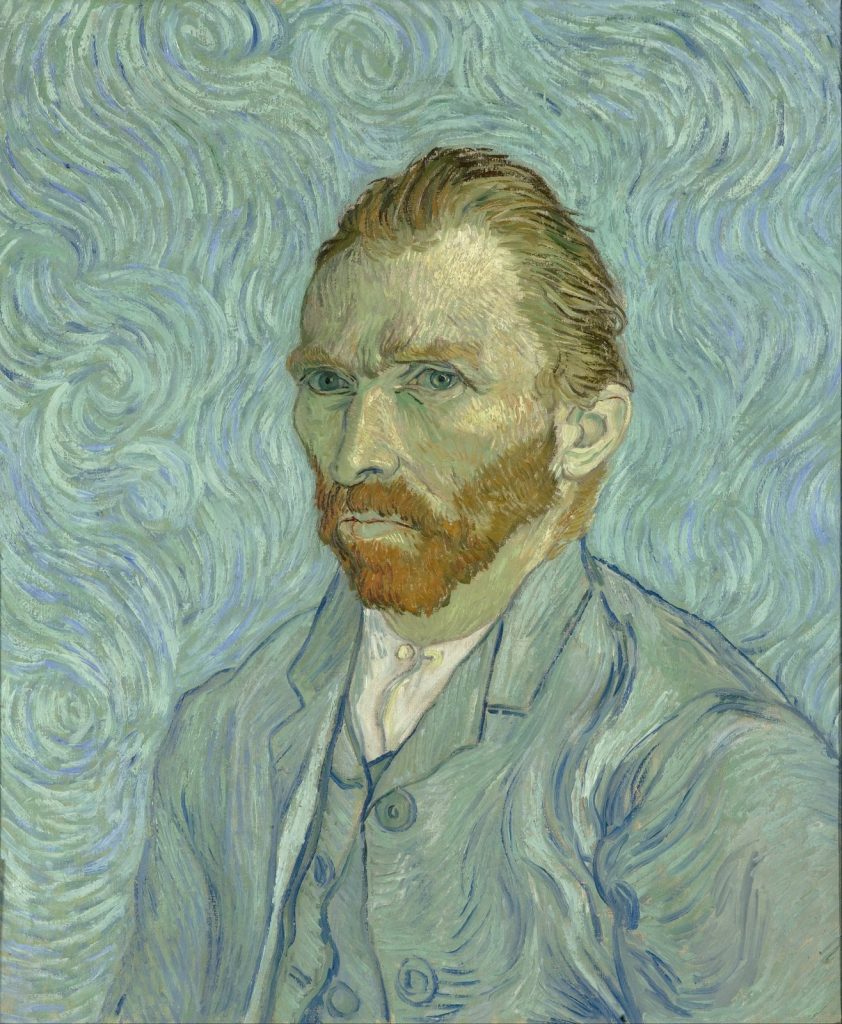
Vincent van Gogh, Ernest Hemingway and Virginia Woolf are the names people reach for whenever someone says that genius and madness go together. The idea is so familiar it has a name of its own: the tortured artist. A large new study of Swedish twins suggests the stereotype is not entirely wrong — but it is narrower than the legend suggests.
The research, published in the journal Molecular Psychiatry and reported on Saturday, 31 October, followed 14,658 twins in Sweden over a decade. People with higher artistic achievement — in music, writing, dance, theatre and visual art — were more likely to report mental health problems and to receive psychiatric diagnoses later on. The same was not true of scientific creativity. People creative in science, invention and other non-artistic work showed no such link, and in some measures they had a lower risk of mental health problems.
The most striking part is what happened when the researchers compared identical twins with each other. Identical twins share almost all of their genes and their upbringing, so a difference between them cannot be blamed on shared genes or family background. When the researchers made that comparison, most of the links between artistic creativity and mental health faded away. That points to a shared cause: the same genetic influences that nudge some people towards artistic creativity may also nudge them towards mental health problems.
One link did survive the twin test. People who reported more depressive symptoms tended to become more open to new experiences over the following ten years — a hint that low mood may push people towards greater openness, the personality trait most closely tied to creativity. It is a small, careful claim, and the authors stress it needs confirming.
At a glance
What happened: A study of 14,658 Swedish twins, published in Molecular Psychiatry on 8 October 2026 and reported on 31 October, found artistic creativity linked to poorer mental health, while scientific creativity was not — and in some measures was linked to better mental health.
Why it matters: It is the most detailed test yet of the “tortured artist” idea, and it suggests the link is real for the arts but not for science, and is largely explained by shared genetic influences rather than creativity causing mental illness.
What happens next: The researchers say more work is needed to find which genes are involved, and to test whether the pattern holds outside Sweden.
An old idea, tested at scale
The belief that creative people are more prone to mental illness is centuries old, fed by famous examples. The new paper opens with four of them: van Gogh, Hemingway, Woolf and the sculptor Camille Claudel. But anecdotes about famous people are a poor way to settle a scientific question: their struggles are far more likely to be remembered than the quiet lives of equally talented people who never made headlines.
Earlier research has been mixed. Some large studies found people in creative professions more likely to be diagnosed with bipolar disorder. Others found the opposite: taking part in music or cultural activities was linked to better perceived mental health and less depression in older adults. A World Health Organization review even recommended cultural activities on prescription.
The authors argue that much of this confusion comes from treating “creativity” as one single thing. A painter, a poet, an inventor and an engineer are all creative, but in different ways, and studies that lumped them together may have blurred real differences.
How the study worked
The researchers used the Swedish Twin Registry, one of the largest twin databases in the world. Their sample came from its STAGE cohort of about 32,000 twins born between 1959 and 1985. Of those, 14,658 took part in at least one of two online surveys, and 6,419 in both; 56.6 per cent were women.
The first survey ran in 2012 and 2013, when participants were aged 27 to 48, averaging about 41. The second ran in 2022 and 2023, when they were aged 36 to 63, averaging about 50. That ten-year gap let the researchers test which came first: creativity or mental health problems.
Creativity was measured in several ways. Participants reported their highest achievement in five artistic fields — music, writing, dance, theatre and visual arts — and in two scientific fields, science and invention. They took a test of divergent thinking, the ability to come up with many different ideas. The researchers recorded their occupations and rated how creative those jobs were, and measured openness to experience, the trait covering imagination, curiosity and interest in art and new ideas.
Mental health was measured in two ways. Participants reported their own depressive symptoms and psychosis proneness — how often they experienced unusual thoughts or perceptions. The researchers also linked them to Sweden’s National Patient Register to find who had been diagnosed with major depressive disorder, anxiety disorder, stress-related disorders, schizophrenia or bipolar disorder. Many participants were genotyped in 2019, allowing the team to calculate polygenic scores — estimates of a person’s genetic likelihood of a trait.
What the researchers found
The results split cleanly into two groups. On one side sat artistic creativity: artistic achievement, artistically creative jobs and openness. On the other sat scientific creativity: scientific achievement, non-artistically creative jobs and a measure of how creative a person’s occupation was. The two groups were related, but behaved very differently on mental health.
Higher artistic achievement and artistically creative employment were both linked to more depressive symptoms and psychosis proneness, and higher openness to more psychosis proneness. Looking forward, people with higher artistic achievement at the start were more likely to be diagnosed later with schizophrenia, anxiety or a stress-related disorder.
Scientific creativity showed the opposite pattern. Its measures were not significantly linked to most mental health conditions, and some were linked to fewer difficulties. Occupational creativity and non-artistically creative employment were linked to lower psychosis proneness, and a higher genetic likelihood of occupational creativity was linked to a lower risk of stress-related disorder, with a hazard ratio of 0.80 — about a 20 per cent lower risk.
The genetic analysis told the same story from a different angle. Genetic risk scores for stress-related disorders, schizophrenia and bipolar disorder predicted higher artistic achievement, and almost every psychiatric genetic risk score predicted higher openness. But a higher genetic risk of major depression predicted lower occupational creativity. When the researchers calculated genetic correlations directly, openness was positively correlated with every mental health problem tested, while occupational creativity was negatively correlated with depression, anxiety and stress-related disorders. In plain terms, the genes behind artistic leanings overlap with those raising mental-health risk, while the genes behind creative scientific work overlap with a lower risk.
The link runs in both directions
The relationship does not run in only one direction. People who reported more depressive symptoms or psychosis proneness at the start also scored higher on openness and artistic achievement ten years later. People previously diagnosed with major depression or anxiety scored higher on openness in the second survey too.
Low mood may draw people towards creative activity as a way of coping, or encourage the inward-looking thinking that is part of openness. The authors also note a subtler idea: a certain amount of mental difficulty may feed creativity, while too much harms it. Mild depressive symptoms might make someone more likely to question norms and appreciate complexity — hallmarks of openness — while clinical depression, with its loss of motivation and pleasure, would be expected to do the opposite.
The twin test: shared genes explain most of it
The heart of the study is the comparison between identical twins. If artistic creativity really caused mental health problems, then the more artistically creative twin in a pair should also be the one with more mental health problems. Mostly, that was not what the researchers found. When they compared identical twins who differed on a trait, most associations between artistic creativity and mental health shrank and became statistically non-significant — strong evidence that shared family influences, above all shared genes, explain most of the link.
There was one exception. When identical twins differed in depressive symptoms at the start, the twin with more symptoms tended to score higher on openness ten years later. That link survived the twin comparison, which the authors describe as evidence of a possible causal effect of depressive symptoms on openness. They are careful to add that even a significant result here cannot prove causality, because twins can still differ in ways the study did not measure.
Lead author Penghao Xia put it plainly to Medical Xpress: “We found higher artistic creativity to be associated with somewhat more mental health problems, and genes play an important role in this association. Though our study suggested the importance of genes, it doesn’t mean environment is not important.”
Why science looks different
The study offers some ideas about why scientific creativity behaves so differently. One is selection: scientific workplaces may be less forgiving of mental health problems, so people who struggle may be more likely to leave, while more resilient people stay. Artistic work may offer more flexible hours and tolerance for unusual behaviour. Another is intelligence, which is more strongly linked to scientific achievement than to artistic achievement, and is itself linked to a lower risk of mental health problems.
What the study cannot tell us
The study has clear limits, and its authors list them honestly. All participants were Swedish twins born between 1959 and 1985, so the results may not apply to other countries, cultures or younger generations. Relatively few had diagnoses of schizophrenia or bipolar disorder, which made some twin comparisons impossible — there were no schizophrenia cases at all among the identical twin pairs who differed on artistic achievement.
The study also used openness as a stand-in for creative personality, and the twin design cannot fully prove or rule out cause and effect: twins differ in individual experiences, friendships and jobs, and any of those could matter.
Finally, the associations were modest. The researchers describe artistic creativity as linked to “somewhat more” mental health problems — not a dramatic or inevitable risk. Most creative people do not develop a mental health disorder, and most people with a mental health disorder are not unusually creative. A statistical link across thousands of people says nothing about any one person’s life.
What this means in practice
The study does not suggest art is dangerous, or that creative people should be treated as if they are ill. If anything, it points the other way: because the link is largely genetic, there is no reason to think making art causes mental illness, or that stopping someone from being creative would protect them.
For people working in the arts, the practical message is familiar: support matters. Creative work often comes with insecure income, irregular hours, public judgement and long periods working alone — all of which can strain mental health whether or not genes are involved. The artists in this study were not more creative because they were unwell; the link runs through shared biology and, in one direction, through low mood feeding openness.
For science, the findings quietly correct the stereotype: in this large, long-running sample, scientific creativity carried no extra risk at all — and in some measures less. The “mad genius” is, on this evidence, a story about the arts, not about creativity in general.
Frequently asked questions
Does being creative cause mental illness?
No, not according to this study. Artistic creativity and mental health problems are linked, but when the researchers compared identical twins — who share their genes and upbringing — most of the link disappeared. That suggests shared genetic influences explain most of the association, rather than creativity causing mental illness. The one exception was a possible effect of depressive symptoms on openness, which needs further research.
Are artists more likely to have mental health problems than scientists?
In this study, yes. People with higher artistic achievement were more likely to report depressive symptoms and psychosis proneness, and to receive later diagnoses of schizophrenia, anxiety and stress-related disorders. People creative in science and invention showed no such pattern.
Does this mean all creative people will develop a mental health problem?
No. The links were modest. Most creative people do not develop a mental health disorder, and most people with a mental health disorder are not unusually creative. The findings describe patterns across thousands of people, not predictions about any individual.
What is a polygenic score?
A polygenic score is an estimate of a person’s genetic likelihood of a particular trait, calculated from their DNA using results from large genome-wide studies. Here they tested whether the genetic risk of a mental disorder also predicted creativity, and vice versa. A high score means a higher likelihood, not a certainty.
Why did the researchers study twins?
Identical twins share almost all of their genes and grew up in the same family. Comparing twins within a pair strips out the effects of shared genes and upbringing. If a link between two traits survives that comparison, it is more likely to be a direct effect; if it fades, shared family factors are the more likely explanation.
Does the study apply to people outside Sweden?
Not necessarily. All participants were Swedish twins born between 1959 and 1985. The pattern may be similar elsewhere, but it has not been tested in other countries or cultures.
If I am feeling low, should I try being more creative?
Creative activities can be enjoyable and absorbing, but creativity is not a treatment for depression or any other mental health problem. If you are struggling, the best step is to speak to a doctor or a qualified mental health professional, or to contact a mental health helpline in your country.
Conclusion
The “tortured artist” turns out to be real, but only in a limited sense. In the largest and most detailed study of its kind, artistic creativity was linked to poorer mental health, while scientific creativity was not. The link ran in both directions over a decade, and it was largely explained by genes shared between artistic inclination and mental health risk, rather than by creativity itself causing harm. One small thread — low mood feeding greater openness — survived even the strictest test, and it is the lead they want to follow next.
The study replaces the romantic myth with something more useful: creativity is not one thing, genes matter, and the people who make art deserve the same practical support for their mental health as anyone else.
This article is for general information and education only. It is not legal or financial advice.
Sources
- https://medicalxpress.com/news/2026-10-twin-links-artistic-scientific-creativity.html (Medical Xpress, 31 October 2026)
- https://www.nature.com/articles/s41380-026-03925-5 (Molecular Psychiatry / Nature, 8 October 2026)
- https://thegentleheretic.substack.com/p/creativity-mental-health-and-shared (The Gentle Heretic, October 2026)
